

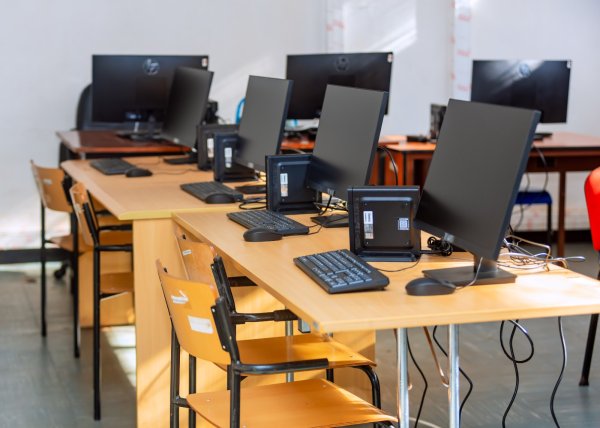
The AI laboratory, built at the university’s College of Science and Technology (UR-CST), is designed to give students and researchers the computing power they need to develop and test AI projects, rather than relying on ordinary computers that can struggle with demanding applications.
The facility was established through the TELLS project, a six-year initiative focused on transforming higher education and promoting lifelong learning as part of efforts to support sustainable development.
TELLS brings together the University of Rwanda, Uganda’s Makerere University, Ethiopia’s Jimma University and Norway’s University of Agder. The project began in 2021 and is scheduled to end in December 2026, with a budget of about 797 million Rwandan francs.
Dr. Mathias Nduwingoma, who leads TELLS at the University of Rwanda, said the new equipment would give students an opportunity to move beyond learning AI in theory and actually build projects using the technology.
“AI computers need a lot of space and processing power because they are doing many things at the same time,” Nduwingoma said.
The laboratory has 10 computers. Eight have one-terabyte hard drives, while two larger machines have two terabytes of storage. They are also equipped with graphics processing units (GPUs), which are particularly useful for the heavy calculations involved in AI applications.
Nduwingoma said the equipment would initially be used by PhD students and engineering students, especially those studying AI, as the new academic year begins.
For students who previously had limited access to machines capable of handling AI workloads, the laboratory could make practical research easier and give them a chance to develop projects they can take beyond the classroom.
But the AI laboratory is only one part of what TELLS has supported at the University of Rwanda.The project has funded the education of 10 students, including two PhD students and eight undergraduate students studying education technology.
It also helped the university establish an undergraduate programme in education technology, which now has 41 students, and is supporting plans to train 60 secondary-school teachers in the field.
At the College of Education, TELLS helped revise the undergraduate curriculum in computer science education and supported the development of a system for offering short-term academic programmes.
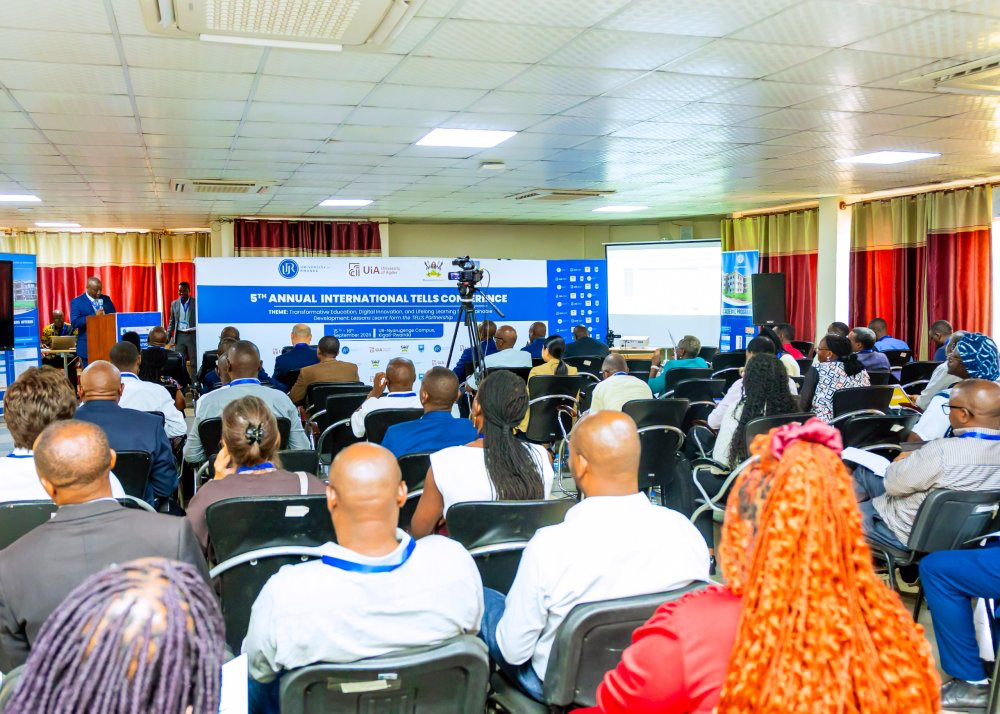
The progress was discussed at the project’s fifth meeting, held in Kigali from Sept. 15, bringing together representatives from the four participating universities.
For university officials, the bigger question is how quickly education can adapt as technology changes.
Prof. Florien Nsanganwimana, director general of the University of Rwanda’s College of Education, said educators should be thinking about how to ensure that students are prepared for a world increasingly shaped by AI and other technologies.
“How can we transform education so that it remains relevant, inclusive and focused on what people need in a world experiencing so many technological changes, including artificial intelligence?” he said.
Nsanganwimana said TELLS had helped the College of Education take steps towards integrating technology into teaching while giving its staff more confidence to develop new initiatives.